People now ask an assistant for a recommendation and read the answer instead of ten links. GEO is the work of making your business easy for those assistants to find, understand and quote correctly.
Generative engine optimization (GEO), also called answer engine optimization (AEO), is the practice of preparing a website so that AI assistants such as ChatGPT, Gemini, Perplexity, Copilot and Google’s AI Overviews can read it, trust it and cite it in their answers. It builds on SEO and adds four things: text an assistant can read without running scripts, direct answers and plainly stated facts, machine-readable business data, and one consistent identity across the web.
Sound familiar?
An assistant describes your business and gets it wrong
Other companies are named in AI answers and yours is not
Your site is an app that AI crawlers receive as a blank page
What's included
AI-readability audit
We fetch your pages the way an assistant does, without running scripts, and show you exactly what it receives.
Pages assistants can read
Every page delivered as finished text, not assembled in the browser.
Answer-first content
Questions answered in full sentences that still make sense when quoted alone, plus real tables of facts.
Structured data
Your business, products, prices and FAQs labelled so a machine does not have to guess.
A summary file for assistants
An llms.txt file: your key facts and pages in plain text, generated from the site so it never goes stale.
One consistent identity
The same name, address, phone and description on your site, Google Business Profile and directories.
How an AI assistant decides what to say
An assistant answers in one of two ways. Either it relies on what it absorbed when it was trained, or it searches the web at that moment, reads a handful of pages and writes a summary with links to them. The second is where a business can make a difference today.
To be one of those pages, a site has to pass four tests. It must be findable, which is ordinary SEO. It must be readable, meaning the text is in the page and not drawn later by a script. It must be quotable, with sentences that carry a complete fact. And it must be credible: the same facts wherever the assistant looks.
What makes a sentence quotable
An FAQ answer such as “Yes, after a code audit” means nothing once it is lifted out of the page. “Pandoratech maintains apps it did not build, after a code audit” can be quoted anywhere. We found answers like the first one on our own website; the example below shows what we did about it.
The same holds for numbers. A fact in a real table, with a label beside it, is far easier for a machine to pick up than the same fact in a decorative graphic.
What we do not promise
Nobody can guarantee that an assistant will mention your business. The assistants change often, and none of them publishes its rules. The llms.txt file is a proposed convention, not a ranking signal; we provide it because it costs little and some tools read it. What we promise is that an assistant which does look at your site will find it readable, accurate and easy to quote.
How we did it: examples from our own work
We started with our own website and products, then applied the same work to client sites. The figures are measurements of the live sites that anyone can repeat.
Figures measured on 10 October 2026.
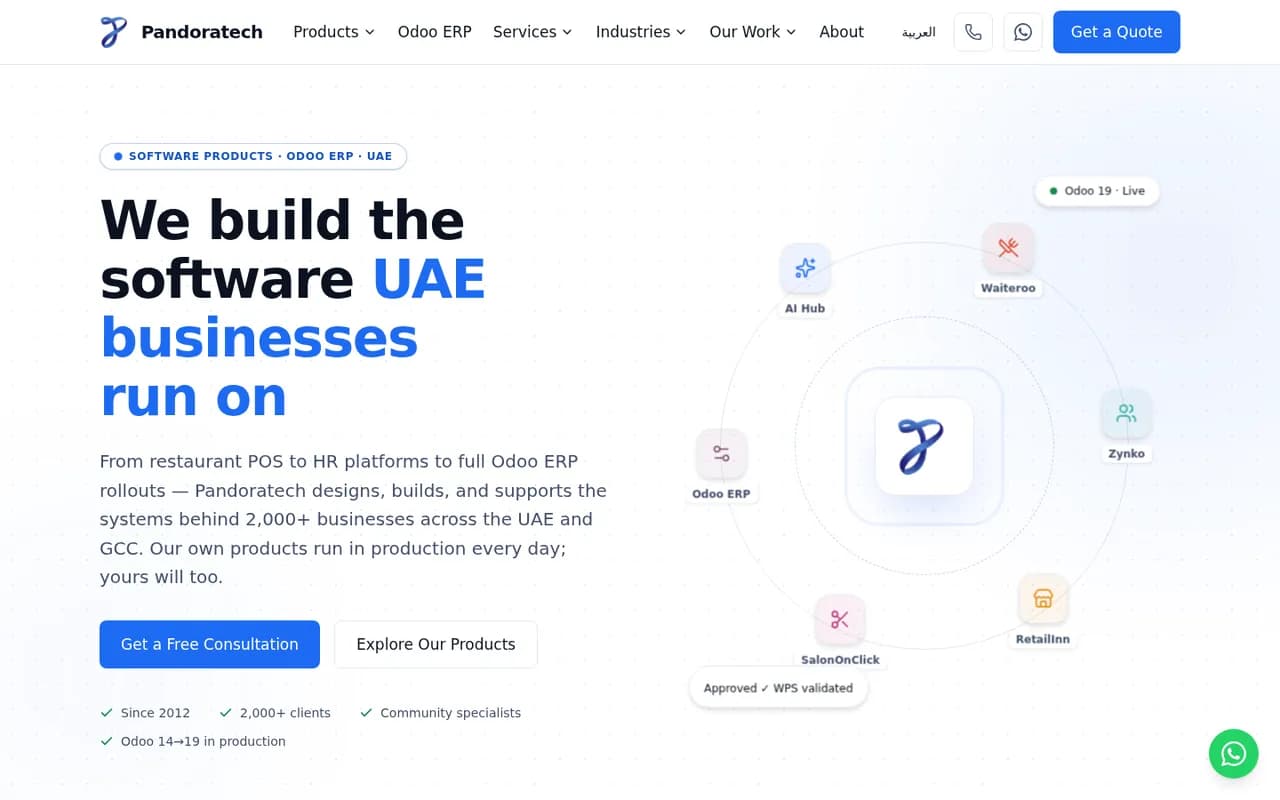
pandoratech.ae
Pandoratech
Our own website · Al Ain & Dubai, UAE
Our own website: facts an assistant can lift
Our pages were well designed but thin on facts that stand alone. Many FAQ answers were ten words long and meaningless out of context. Google’s AI summary also described our registered company from its Business Profile without linking it to this website.
What we did
Added real tables of facts to service, industry and city pages
Published an llms.txt file with quick facts and full-sentence answers that make sense when quoted alone, generated from the same data as the site
Published both our brand name and our registered company name, so the two are recognised as one business
Cut the work a phone has to do to show the page
What can be measured
59 → 95
Google Lighthouse mobile performance, 3 October 2026
3/3
Lighthouse “agentic browsing” checks passed, 3 October 2026
Every car readable by an assistant, with its price
The new Barugzai Motors site is an app. Left as it was, an assistant that does not run scripts would have received the same nearly empty page at every address.
What we did
Made every page arrive as finished text, in all three languages
Labelled each car with its make, price and availability in structured data
Marked up the FAQs the old site had only as plain headings
Published a short and a full summary file, rebuilt whenever the stock changes
Welcomed the main AI crawlers by name in the site’s crawler rules
A buyer may ask an assistant for a manufacturer of a particular glove or jacket. Nanba Wear’s catalogue has more than 1,300 styles.
What we did
Published a summary file listing the ranges, what is made and how ordering works
Welcomed the main AI crawlers by name in the crawler rules
Described the company in structured data
What can be measured
829
words on the home page readable without scripts
20 KB
summary file for assistants
What an assistant receives from each site
Each home page was fetched without running any script, the way many AI crawlers fetch it, on 10 October 2026.
What an assistant receives from each site
Website
Words readable without scripts
Summary file (llms.txt)
Structured data on the page
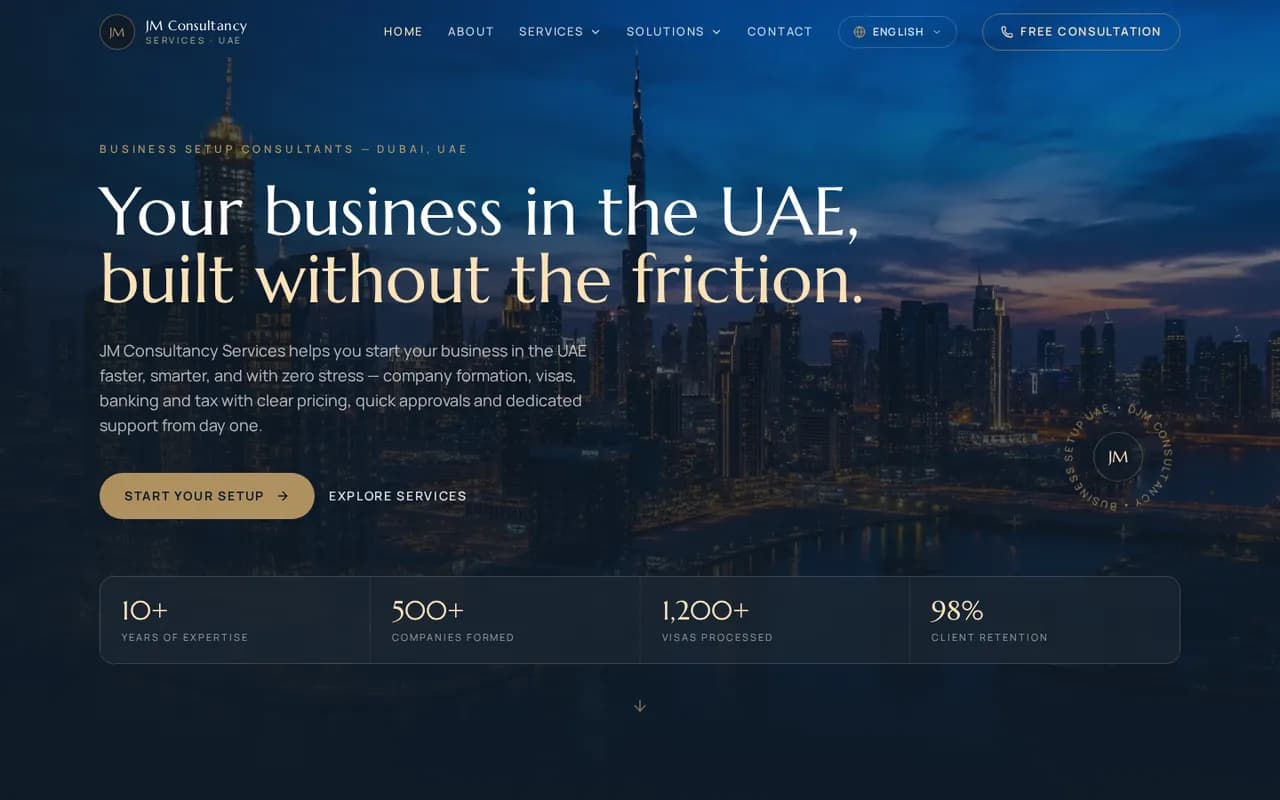
JM Consultancy Services
1,807
Yes
Professional service, FAQs
Barugzai Motors
1,333
Yes, short and full
Car dealer, cars with prices, FAQs
Tailoroo
1,130
Yes
Software product, organisation, FAQs
Pandoratech
1,118
Yes
Organisation, local business, FAQs
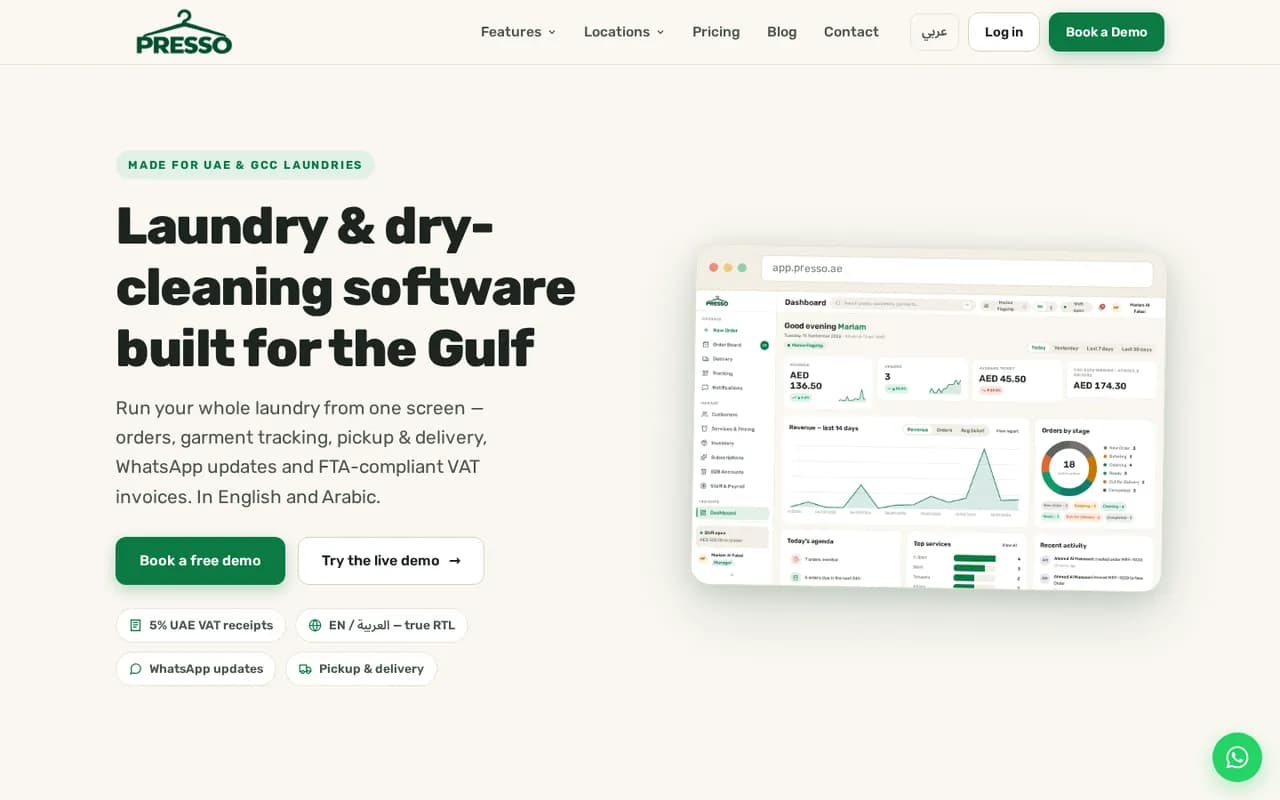
Presso
1,111
Yes
Software product, organisation, FAQs
Nanba Wear
829
Yes
Organisation
A site built as a browser app with none of this work typically returns close to zero words here. These figures show readiness. They are not a count of AI mentions.
SEO and GEO side by side
SEO and GEO side by side
Question
SEO
GEO
What is the goal?
Appear in the list of search results
Be named or quoted inside the answer itself
Where does it happen?
Google and Bing search
ChatGPT, Gemini, Perplexity, Copilot, Google AI Overviews
What is being judged?
Whole pages
Single passages, facts and figures
What helps most?
Readable pages, the right page per search, sound addresses, links from other sites
Text readable without scripts, direct answers, fact tables, structured data, one consistent identity
How is it measured?
Google Search Console: impressions, clicks, positions
Asking the assistants a fixed list of questions and recording whether you are mentioned, cited and described correctly
What do they share?
The same foundation: a site machines can read and people can trust
The same foundation: a site machines can read and people can trust
Sources and review date
Content reviewed 10 October 2026. Search engine and AI assistant guidance changes; check the source before relying on it.
GEO stands for generative engine optimization. It is the work of preparing a website so that AI assistants such as ChatGPT, Gemini, Perplexity and Google’s AI Overviews can read it, trust it and cite it. Some people call the same work AEO, answer engine optimization.
Does GEO replace SEO?
No. Assistants that search the web still find pages through search engines, so a site that is weak in SEO is rarely strong in GEO. GEO adds a layer on top: readable text, direct answers, clear facts and a consistent identity.
Can you guarantee that ChatGPT will recommend my business?
No. Nobody can, because the assistants do not publish how they choose and they change often. We make sure that an assistant looking at your site finds accurate, readable and quotable information, and we measure by asking the same questions before and after.
What is llms.txt, and does it work?
It is a plain-text file at the root of a website that summarises the business and links to its key pages, written for AI tools. It is a proposed convention, not an official standard, and no major assistant has promised to use it. We add it because it is cheap, some tools already read it, and Google’s Lighthouse audit checks for it.
How do you measure GEO?
In two ways. First, readiness: how much of each page an assistant can read without scripts, whether the structured data is valid, whether the facts match everywhere. Second, outcome: we agree a list of questions your customers ask, put them to the main assistants before and after the work, and record whether you are mentioned, cited and described correctly.
Should we block AI crawlers or let them in?
If you want assistants to recommend you, let them in: a crawler that is blocked cannot read your pages. Businesses that sell their content, such as publishers, may decide differently. We set the rules to match your choice and write them down.
Tell us what's slowing your business down
Get a free 30-minute consultation — we'll map your workflow and show you exactly what to automate first.
 Pandoratech